


In 1916 Rodger Casement arrived at Banna Strand bringing arms to the power struggle in Ireland. He was captured and later executed, however his fellow soldier Capt. Robert Monteith escaped and ended up here in these woods in hiding for some time.
He was brought here in the dead of night across the mountain on the south side of the valley and his guides were two Lenihan brothers who had returned from the Klondike gold rush in Alaska and were well experienced in navigating.
Robert Monteith was left in the care of another Lenihan man who lived as a recluse in the woods with his cow and his donkey but had a history of hating authority.
Monteith evaded several search parties due to the stealth and cunningness of the people who lived here in the glen and he eventually escaped back to America several months later. Many years down the line he wrote a book called Casements Last Adventure and in it he explained in detail of his stay here in Glanageenty Woods among its people.
Robert Monteith was born on March the 1st 1879 at Newtownmountkennedy, Co. Wicklow. He was one of nine children born to protestant farmer Joseph Monteith and his wife Mary, nee Dillion.
At 16 Robert joined the British Army and served in the Royal Horse Artillery in India and then fought in the Boer War. Leaving the army in 1902 with the rank of Sergeant Major he returned to Ireland in 1903 where he commenced work in the ordnance survey field.
In 1909 he married, against the wishes of his family, a Mollie McEvoy who was a Catholic, an actress and a widow with 3 children.
As the war escalated in Ireland, Robert moved his family to New York in around 1915 before he himself moved to Berlin where he was to meet up with Rodger Casement.
Here the 2 of them gathered together Irish prisoners of war and put together a unit of 56 men whom they trained in machine gun use.
On the 12th of April Monteith, Casement and a Sgt Beverley set off for Ireland by submarine with 20,000 rifles for the rising – arriving at Banna Strand on the 21st April.
On Good Friday 1916, Sir Roger Casement and 2 comrades arrived at Banna Strand carrying arms to aid the struggle here in Ireland. Due to ill luck the plan went wrong, Sir Roger Casement was captured and taken to England where he was charged with treason and later executed.
As for the other two men; one by the name of Beverley was captured and later released, but one man Capt Robert Monteith was never captured.
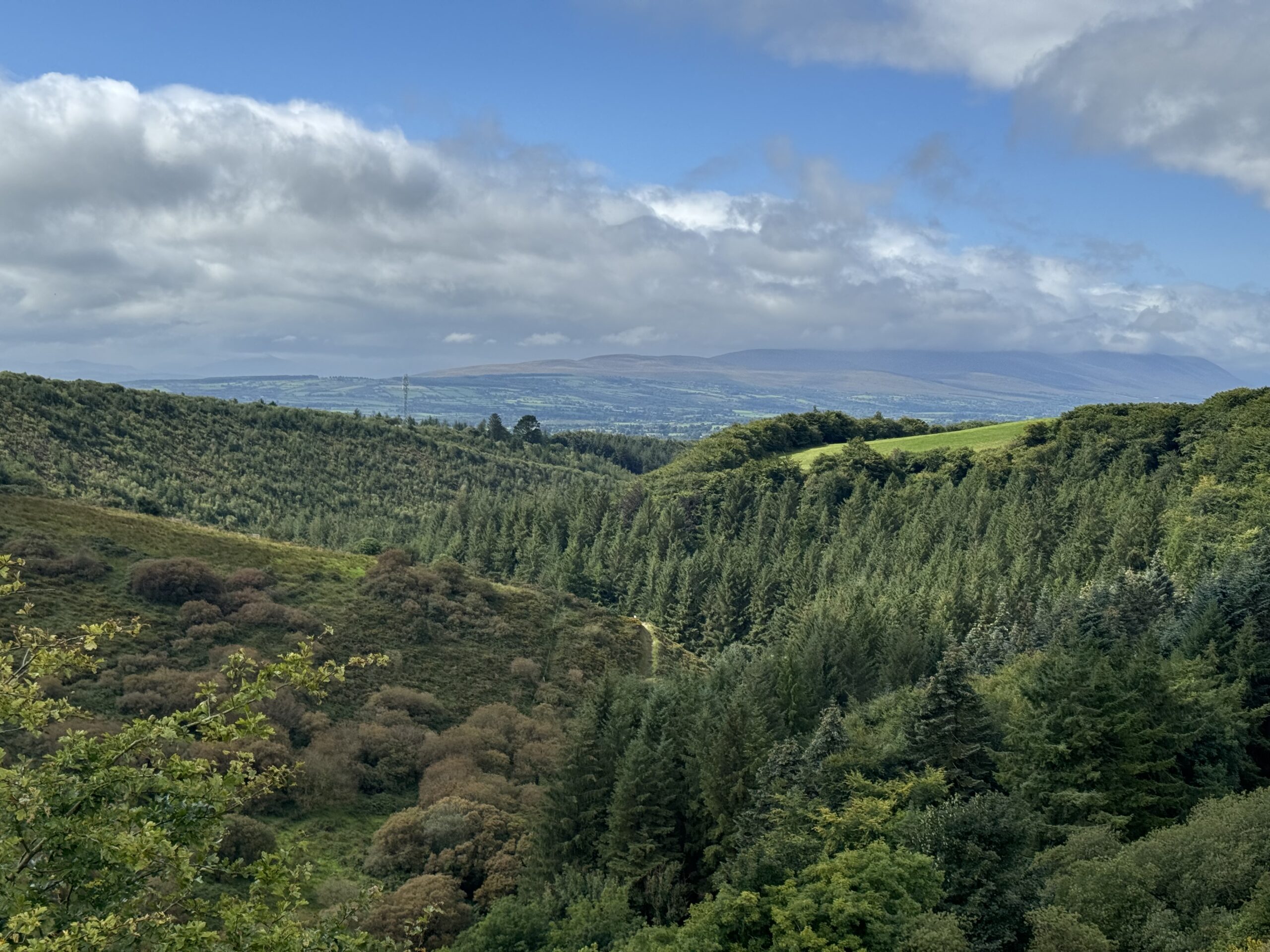
Many years later in the book “Casements Last Adventure” he wrote of his experiences on the run and how on a dark and wet April night he was guided down this mountain pass here in Glanageenty by a Mr Lenihan.
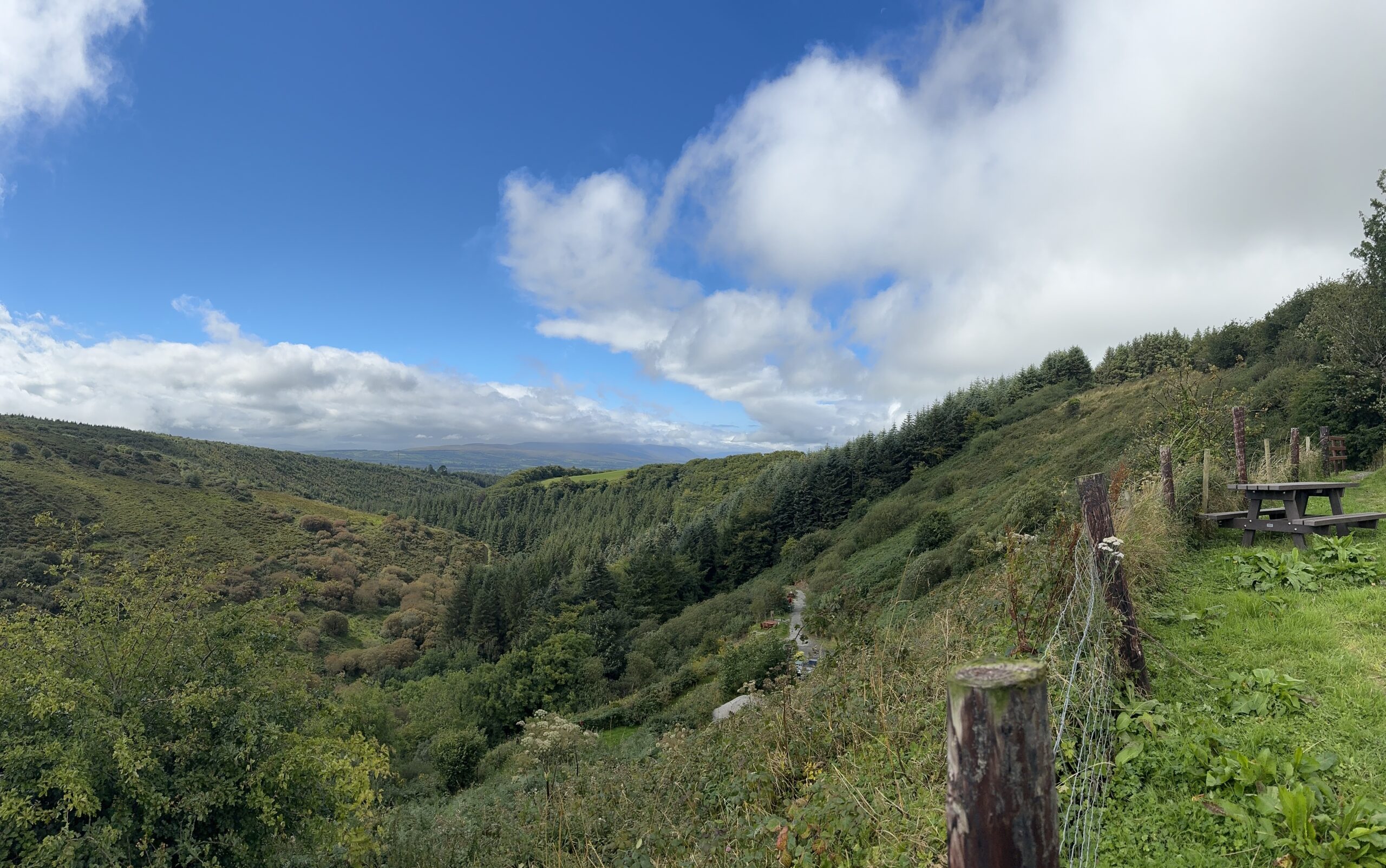
Mr Lenihan was a veteran of mountain trekking having been part of the early days of the Klondyke gold rush. Across the swollen river below and up a winding track to arrive at the dwelling of a mountain recluse known as Sean Thaidhg Oig Lenihan, the remains of this dwelling can still be seen by the green field directly under the hikers cabin.
Here in this rugged landscape he evaded his enemies before finally making his escape back to America where he arrived in December just in time for Christmas.
He had worked his passage on board a merchant vessel disguised as a fireman and coal trimmer.

That afternoon his brother called on a friend, an Uncle I believe, an old recluse who lived in a glen the other side of the hills.
He was asked if he would give shelter to a man on the run and he immediately gave assurance he would be only too glad to give shelter to anyone in trouble with the government.
He was known as Sean Thaidhg Oig. I learnt that the old man had a wonderful reputation as an enemy of landlords and governments.
He lived in Glanageenty, hermit-like in a tumbledown cottage. He had a cow, a donkey, a venerable rooster and two sworn enemies: a dog and a cat. It was strange the influence he exercised over these animals; they seemed to understand every word he said. The dog in particular was almost human in his intelligence.
I had enough hill climbing to last me a lifetime, had my guide not known every inch of the ground we would have been in a bad way.
After reaching the hilltop and having a rest and a smoke we resumed the journey and started to descend to the valley on the other side, the slippery heather made my falls frequent, owing to the absence of lights it was hard to keep our direction.
The night was quite dark, we would have had difficulty in locating the cabin in the glen were it not that we heard the barking of the old man’s dog in reply to my guides whistle.
A carefully displayed light gave us the final part of the route. This brought us to the bank of what was usually a stream but was now a swollen torrent due to the recent heavy rains.
With my customary luck in attempting to jump it I landed clean in the centre and waded to the other side, here a narrow path ran up to the cottage. He was a strange figure this old warrior of the glens. He stood about 6 feet tall, his shoulders were stooped and his knees bent from continual hill climbing. His face was furrowed and as brown as boot leather, he had grey hair and a grizzled beard. His eyes were wonderful in their expression, they were as keen and as bright as a hawks and he would stand for hours leaning over the half door of his cottage listening and watching.
The location of his cottage in that beautiful glen with the little gurgling stream beside it and the heather clad hills rising behind it would provide a fit setting for a dramatic or grand opera presentation.
After the war he worked at various jobs before moving to Detroit where he worked his way up to foreman in Ford motors.
He retired from working in 1943 and bought a farm in Michigan.
In May 1947 he returned to Ireland with his wife and settled in Kilcoole, Monteith stayed 6 years in Ireland and saw the retrieval of Casements boat at Banna Strand in 1950.
He returned to Michigan in 1953 and died there on the 18th of February 1956. He left 2 daughters, 2 stepdaughters and 1 stepson.
A monument to Casement and Monteith stands at Banna Strand. Robert Monteith’s papers are in the Florence Monteith Lynch collection in Ryan Library at Iona College New York and contains Monteith’s diary from October 7th 1915 to April 10th 1916.
In his book Casements Last Adventure he describes vividly his stay here in Glanageenty and the time he spent in that little green field by the river directly below the walkway cabin. He also describes his waiting in the bushes on the roadway below for a priest Father Flaherty from Brosna who was taking the huge risk of smuggling Robert Monteith out of Glanageenty and into Limerick city to begin his homeward journey.
The people of Glanageenty take great pride in the role they played in saving the life of Robert Monteith and once more the legend of Glanageenty woods and this mountain landscape creates another chapter in its legacy.
Standing here today in this peaceful setting it’s difficult to picture the drama and the international consequences that this valley below us played over the years of conflict.
Click on the images below for more information on Glanageenty Walks and the History surrounding this area of Ireland.