
A tiny baby born prematurely, it was felt among the medical staff that John would not survive. However, survive he did despite all the odds.
His father’s parents were a Protestant and Catholic combination and his mother’s parents were a Protestant and Methodist combination and now there was about to be more confusion added to the mix. With baby John unlikely to live, and no Protestant Minister quickly available, it was agreed to have a Catholic Priest quickly present his prayers and blessings to the young infant.
Some weeks later John was brought home here to Toureen and the young infant thrived on this rugged landscape.
In fact, as the years rolled by, the young lad became very much part of this landscape as he learned to track and hunt on the nearby hills aided and educated in the art by his father William who was a skilled hunter.
As his skills and love of this landscape became more and more part of the boy it was obvious that his social skills with people was becoming an issue as he very rarely mixed with other human beings outside of his family and most of his time was spent around animals on the family farm or out on the hills and woods with the family dogs,.
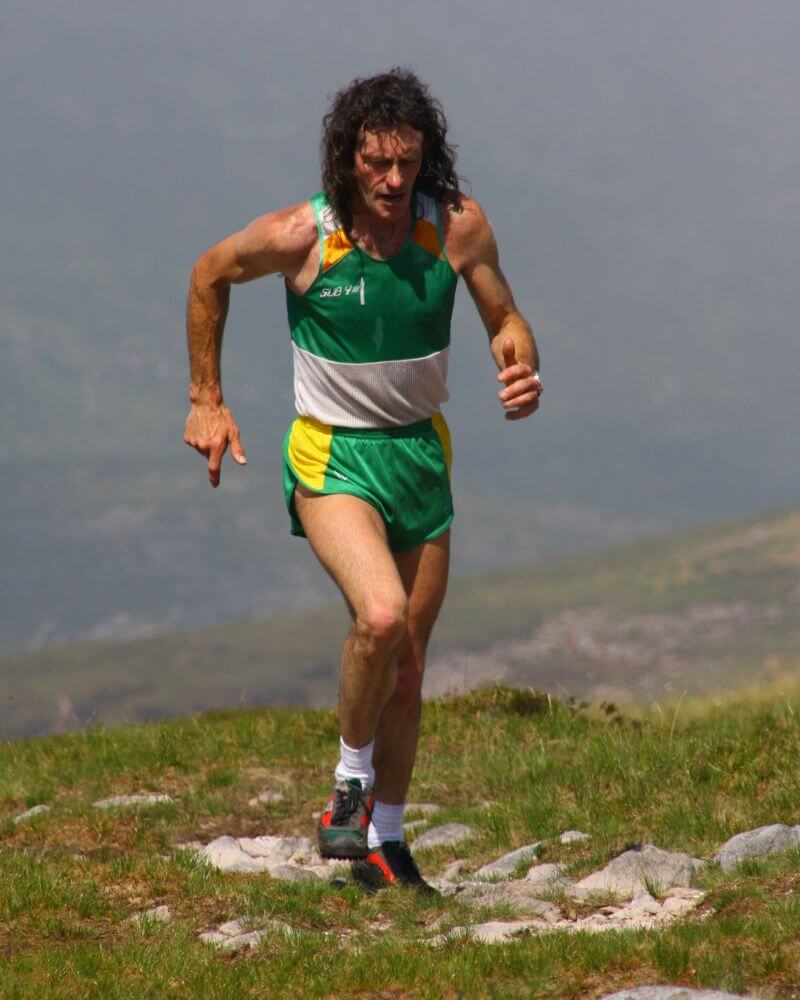
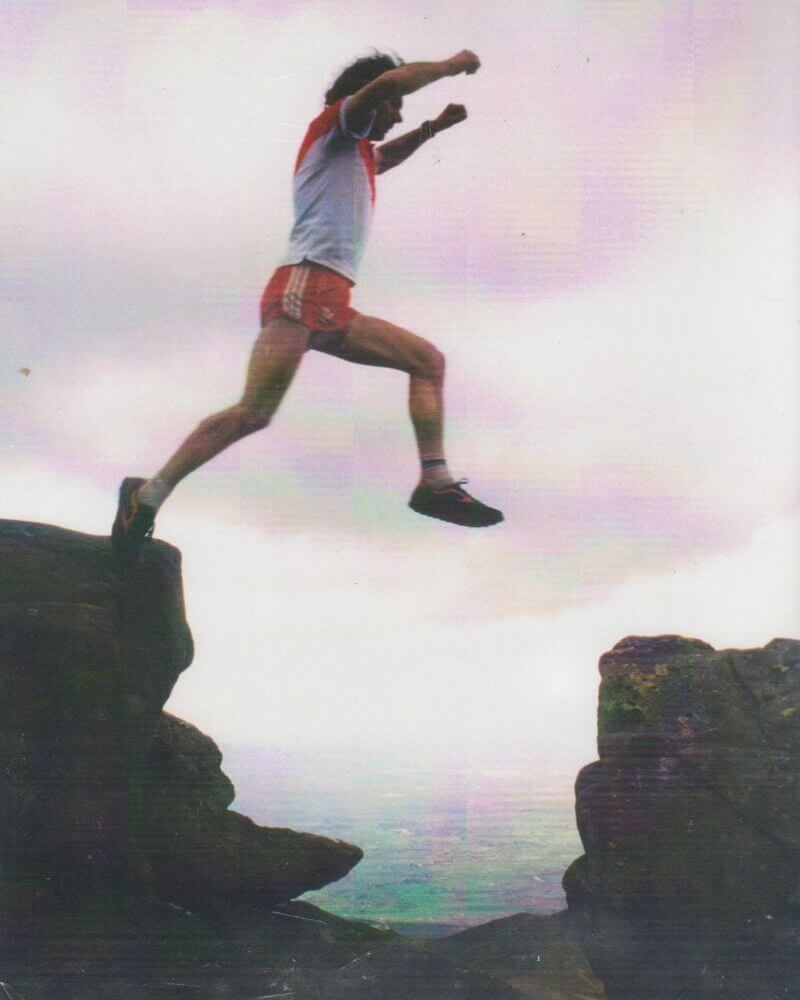
Perhaps this was what Olympic silver medallist and world cross country champion John Tracey saw in the young lad when, years later, John Tracey wrote the foreword on the Tough As Leather book based on the life of John Lenihan. Mr Tracey wrote that on his first meeting with John Lenihan he described him as “almost not tame”.
John was very well home educated by his Grandmother Annie Lenihan as his mother Stella had to return to her own home to help her parents run their farm at Flemby. John didn’t actually start school until he was 7 but with a solid base behind him from his nightly grinds by his grandmother he quickly moved up through the classes. By skipping 2 classes – he skipped low infants and then went directly from high infants into second class thus quickly bringing him up with his own age group.
John started school in the old Clogher school just east of Clogher church. This school is now a residential house owned by the Scanlon family.
After a year John was moved from the Catholic School at Clogher to the Protestant school in Ballymacelligott beside the Protestant Church and when this school closed a few year later he moved along with the other students to the school at Ashe street Tralee where he completed his primary school education.
It was in no small way due to the education provided at home by his Grandmother that John produced such good grades in school and when he enrolled and completed his enrolling exam at the old technical school near the library in Tralee he was placed in year one class A.
Even at this stage of his life it was clear that he had this competitive approach which would undoubtedly serve him well later in his sporting career.
John’s secondary level education started in September and ended 3 months later at the Christmas holidays when it was decided that John was needed at home on the family farm to help his dad.
John didn’t need all that fancy education and learning of languages as he would never be going abroad as he was now commencing life as a farmer here on the slopes of the Stack Mountains; Oh but how wrong was that theory.
While in secondary school, John took no interest in the athletics training but instead showed huge interest in football where he showed potential as an accurate shooting forward. So much so that as Christmas approached John was 1 of just 2 players selected from the 1st year students to travel to Killorglin for a trials for the Kerry techs football team.
However John’s dad felt the risk of injury was too great and someone with a broken hand or leg would be more of a hindrance than a help around the farm and, despite many approaches to the family from the education department and the local clergy etc., John did not return to school ever again.
That first year on the farm was a bit of a rollercoaster for John as he enjoyed the freedom of no more school and the freedom of country life plus the added bonus of school friends visiting at weekends. This was about to change as year two rolled around and due to the difference in their lifestyles a void began to grow between John and his former school mates. With little in common they all began to go their separate ways and John began to feel the loneliness of being isolated from his own age group here in the very rural setting of the Stack Mountains.
It was in 1976 into 1977 that John began to develop a love for running and this led him to taking part in the U16 community games marathon in Ballymacelligott. This so-called marathon was simply a couple of laps of the local football field but John finished 2nd, losing out in a sprint finish. This now qualified John for the county community games and with that marathon around 10k on the road John fancied his chances over the much longer distance. He visited Vincent Murphy sports shop in Castleisland and bought himself shorts, a singlet and shoes and, armed with his new purchases, training for the county community games final began in earnest.
When the day of the marathon arrived John cycled to the Austin Stacks park in Tralee and waited patiently for the marathon to be called. With his pulse racing with anticipation, John headed for the entrance gate as the runners were called to the start line.
At the gate John was stopped by a steward who wanted to know where his race number was. John had to admit that he knew nothing about having to wear a number until a few minutes before the race and, despite a frantic search for the discarded number, he could not find a Ballymacelligott number anywhere. The steward was not prepared to listen to any excuses so John was not allowed to take part in the event. John watched with tear filled eyes as the marathon runners headed out the gate for the open road.
That incident with the steward was to leave a lingering scepticism toward figures of authority for the rest of John’s life.
A couple of months later John took part in his first ever road race which took place in Castleisland and here John finished well ahead of the community games marathon silver medallist and just behind the young lad who had won the gold medal leaving John to muse over what might have been.
However John was not about to get a chance to dwell too much on that because that was the night that opened up a whole new chapter in the life of 17 year old John Lenihan.
A chapter that would only close when John had won a world title, been crowned Kerry’s sports person of the year plus voted Jury’s Irish Independent sports person of the week in September 1991.
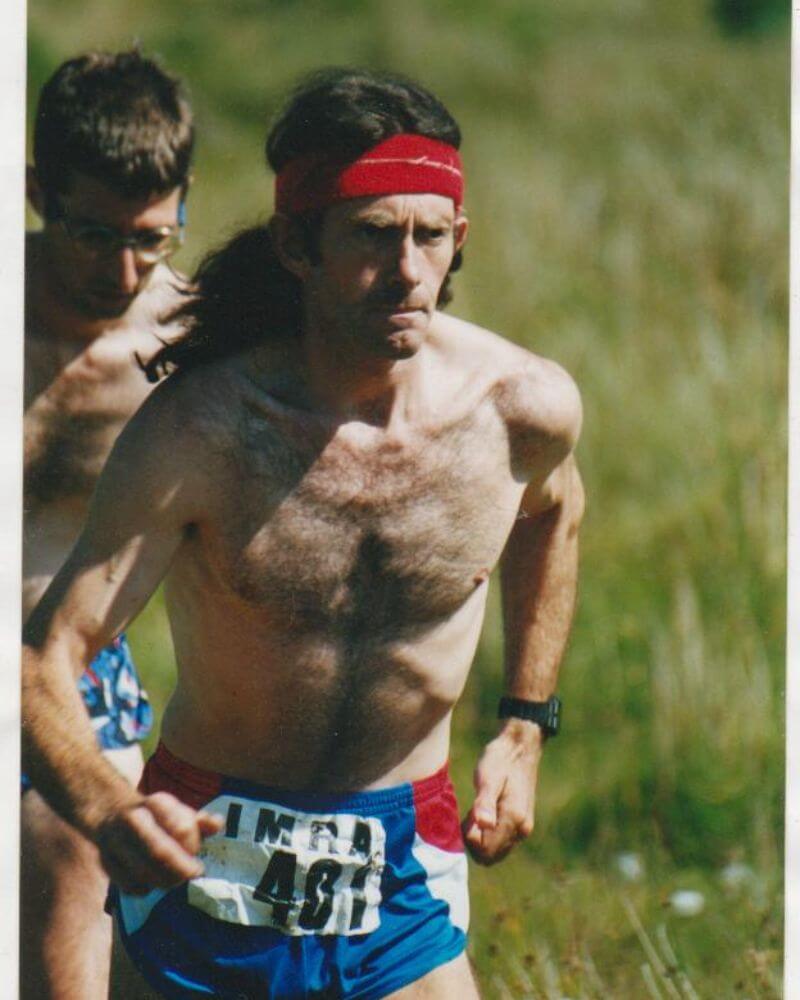
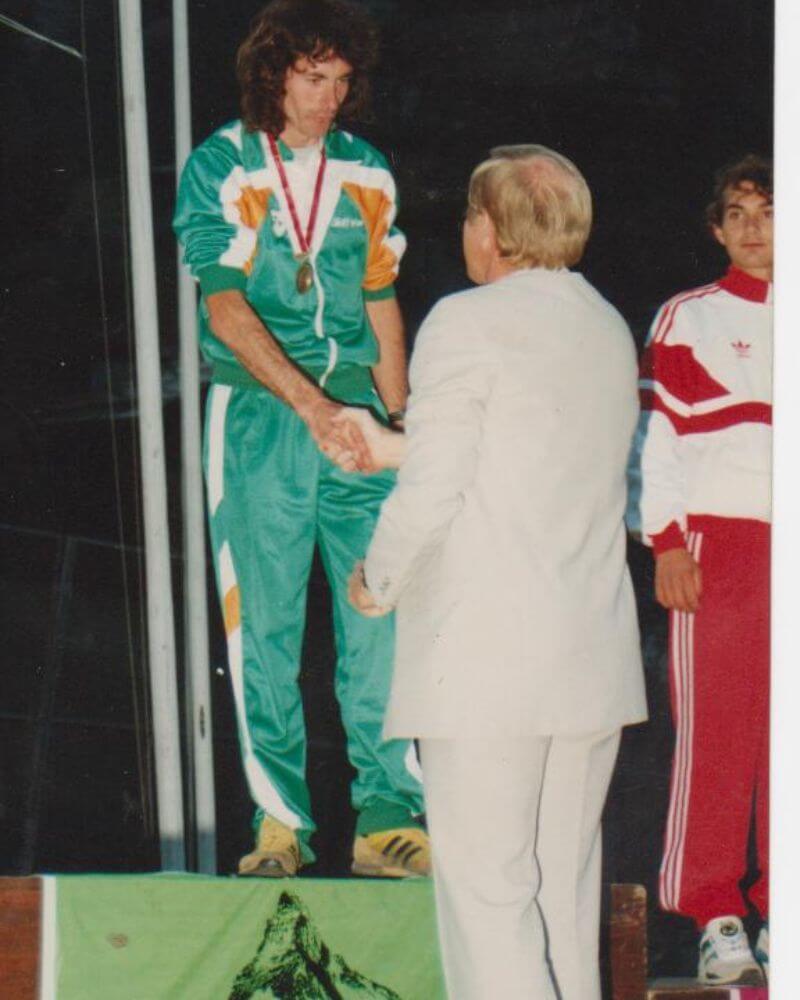
John’s athletics career is well documented in Con Dennehys book ‘Tough as Leather’ so here we will only outline the highlights of a 30 year career.
After that race in Castleisland John joined the newly formed An Riocht Athletic club under the guidance of the Walsh twins Joe and Gerald. John quickly made his way up through the ranks from club runner to county team member and after a couple of years he got his first call-up for international duty with the Irish team.
Cross country races at Gateshead and Crystal Palace quickly followed and it was a huge boost for John to be on the team with his hero John Tracey.
John Lenihan went on to win 14 Kerry senior cross country titles plus the Munster Cross country title and finished with a silver and a bronze medal at the Irish senior inter counties cross country championships behind John Tracey and Gerry Deegan on one occasion and 10 seconds behind Deegan for Silver on another occasion. He also ran for Ireland at the World Cross Country Championships.
John did very little track racing but his 13.55 for the 5000m at Cork City sports international event got John drafted into the Irish Olympic panel and he travelled to their training camp in Italy.
John won numerous county track titles over 1500 and 5000 meters plus Munster champion over 5000metres and took a bronze medal at the Irish 10,000 meters championship producing a time of 29.36 for the distance.
It was on the roads that John really performed at a higher level and it was unfortunate that the half marathon was not an Olympic event as it was John’s strongest distance. In 1985 Ireland introduced it as a new Championship event and John travelled to Dublin where he won the inaugural Irish half marathon Championship in a time of 63 minutes and 15 seconds – breaking the old course record and that time still stands today in 2024 as the Irish Championship record almost 40 years later.
John competed twice more in the Championship winning another gold and a silver.
John travelled to the Isle of Man for the Easter athletics festival 3 day event where he finished 3rd in both the 5 mile road race and the relay race and won the mountain race. John travelled back to the Isle of Man on one other occasion where he won all 3 events to win the competition outright.
It was in the sport of mountain racing or, as it’s known in the UK, fell racing, that John really excelled. On his first race up and down Carrauntoohil John knocked 40 minutes off the previous record with a time of 1 hour 11 minutes and 42 seconds – a time that has never been beaten. John went on to win the race 19 times in total.
He also won the Snowdon International mountain race in Wales. He was the first Irish athlete to be selected on the Ireland and UK relay team for the Morbegno International mountain racing relay event near Lake Como in Italy.
He won the first ever Strandhill warriors race in Sligo in the mid ’80s and a prize of £1000. He went on to win it 5 years in a row and then didn’t compete in the event again until he was asked back to start the race for its 21st Anniversary. Here John did the unbelievable by winning the event again.
John represented Ireland at 14 World Championships, taking a number of top 6 placings in the world. But it was in September of 1991 that John really fulfilled his dream by winning the gold at the World Up And Down Championships in Zermatt at the foot of the Matterhorn in Switzerland and led the Irish team to Bronze medals.
In his career John raced in New Zealand, South Africa, Alaska, America, Borneo, The Island of Reunion, plus all across the UK. He also raced in France, Italy, Switzerland, Germany, Czechoslovakia, Poland and Austria. So much for the young lad that didn’t need second level education or knowledge of other languages as he was never going to travel too far from this farm here on the Stacks Mountains!
When people ask John what would he do different if he could do it all over again, his reply is:
“I wouldn’t do anything different, I would just do more of it”.
When asked what was the outstanding lesson learned from his career he replied:
“When we compete we don’t realise how small a time frame the window of opportunity of peak performance really is”
Today in 2024 John continues to enjoy jogging slowly around the trails here at Glanageenty and also continues to hike the mountains of Ireland and beyond.
Only a few years ago he achieved a lifelong dream by spending 3 weeks in Nepal and hiking to Everest Base camp.
In 2008, John along with NEKD and Fáilte Ireland came together to create a loop walk somewhere in Kerry. Glanageenty was chosen as the location and John was given the task of planning and designing the route that would take in all the historic locations while also maximising the outstanding scenery that is available from here. Today Glanageenty walkway as you know it is the reward for all the ground work put in place back in 2008.
John is a great believer in the saying that I don’t want to arrive at my grave with my body in mint shape, instead I want to arrive in a cloud of dust skidding in sideways with parts falling off and saying “that was one hell of a ride”.
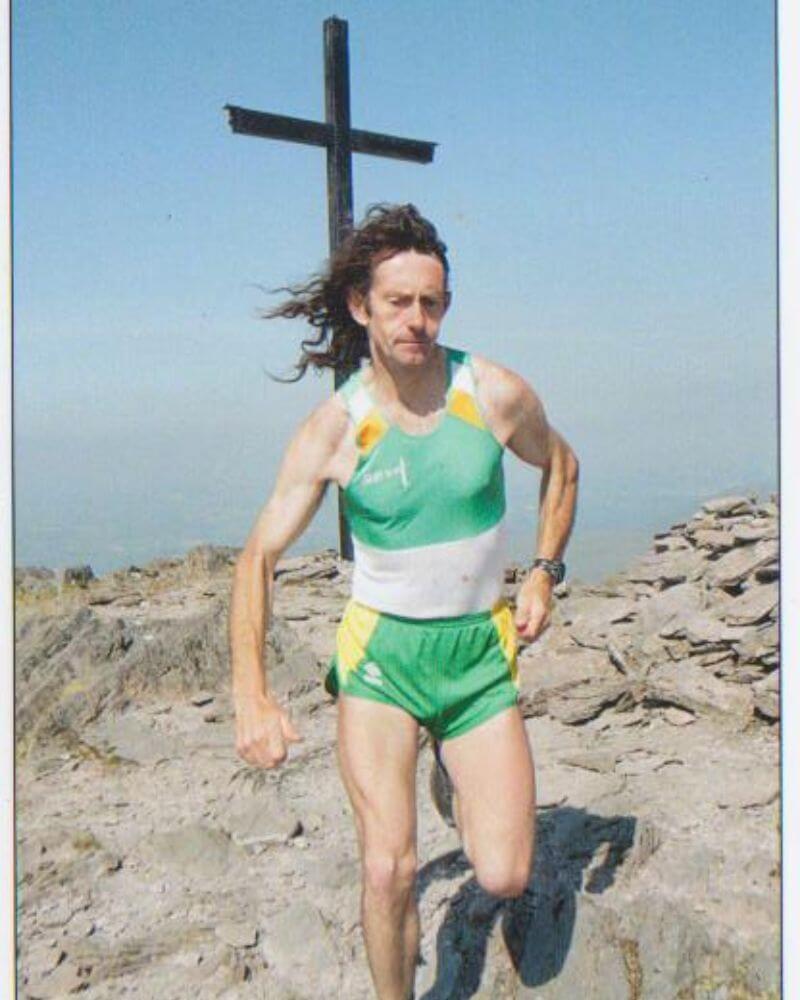


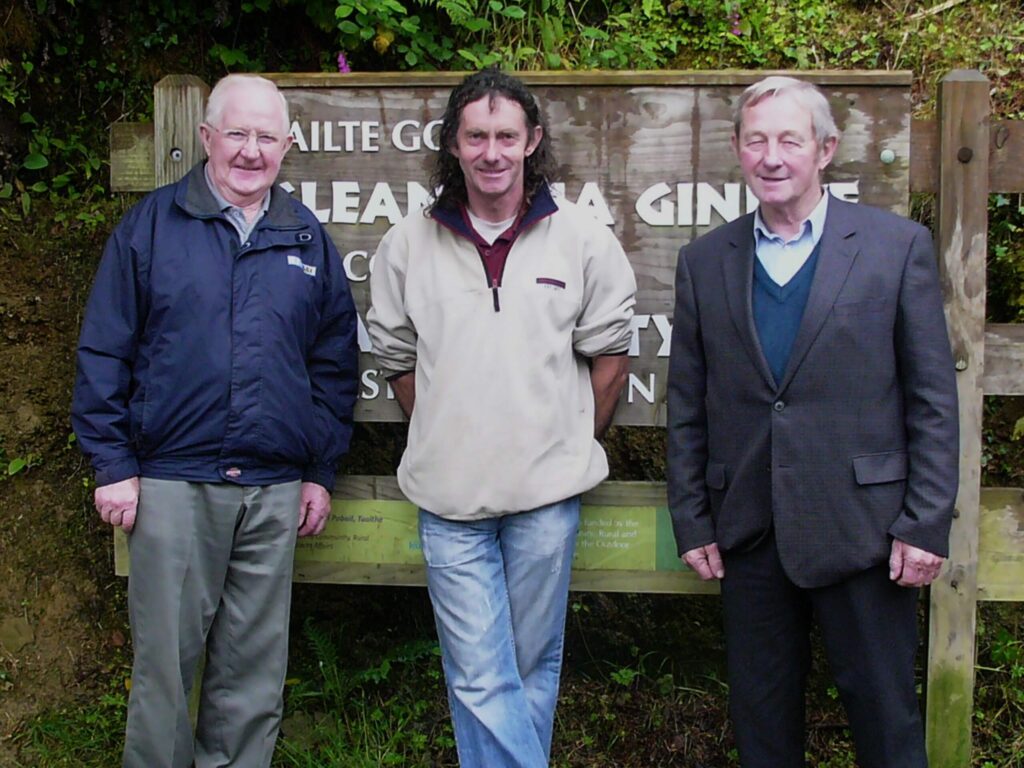
Click on the images below for more information on Glanageenty Walks and the History surrounding this area of Ireland.