

Around 1000 people a week now arrive to see for themselves this 9km of a hidden gym of mystery myth and folklore.
There are many seats and tables along the trail in Glanageety which allows hikers to sit and absorb the atmosphere of this special place.
If you clear your mind and allow yourself to daydream a little it takes no great stretch of the imagination to picture the drama that has unfolded here in this very place which was at one time nicknamed the Sherwood Forest of Munster.
In the 1500’s these woods were a hive of activity as horsemen became both the hunter and the hunted in the Earl of Desmond era, stories abound of narrow escapes and harrowing deeds committed here.
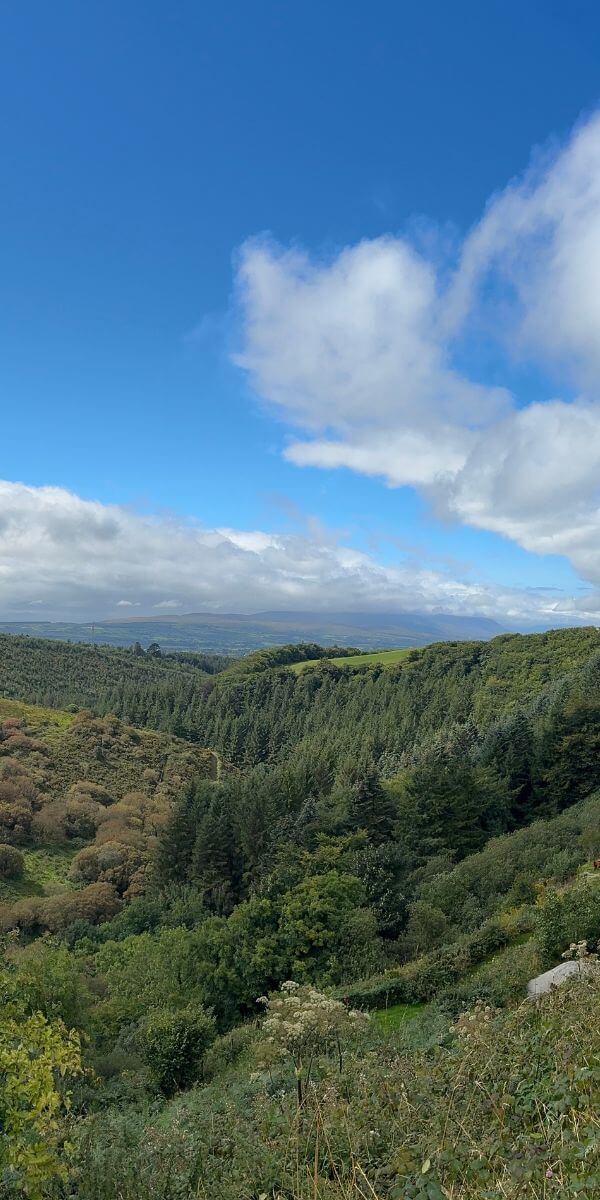
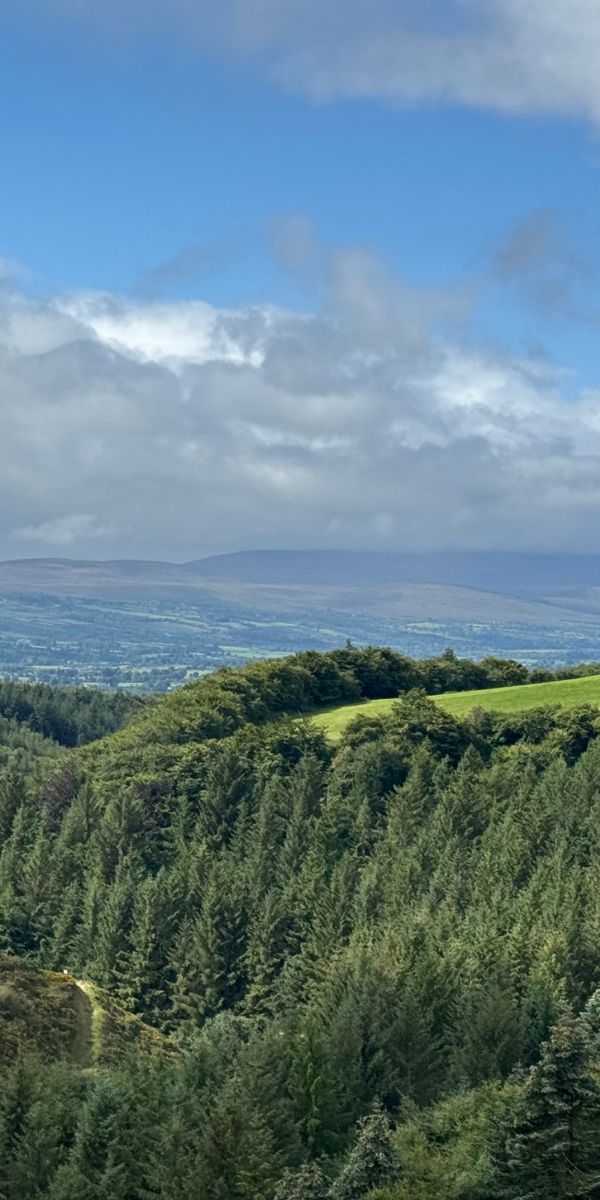
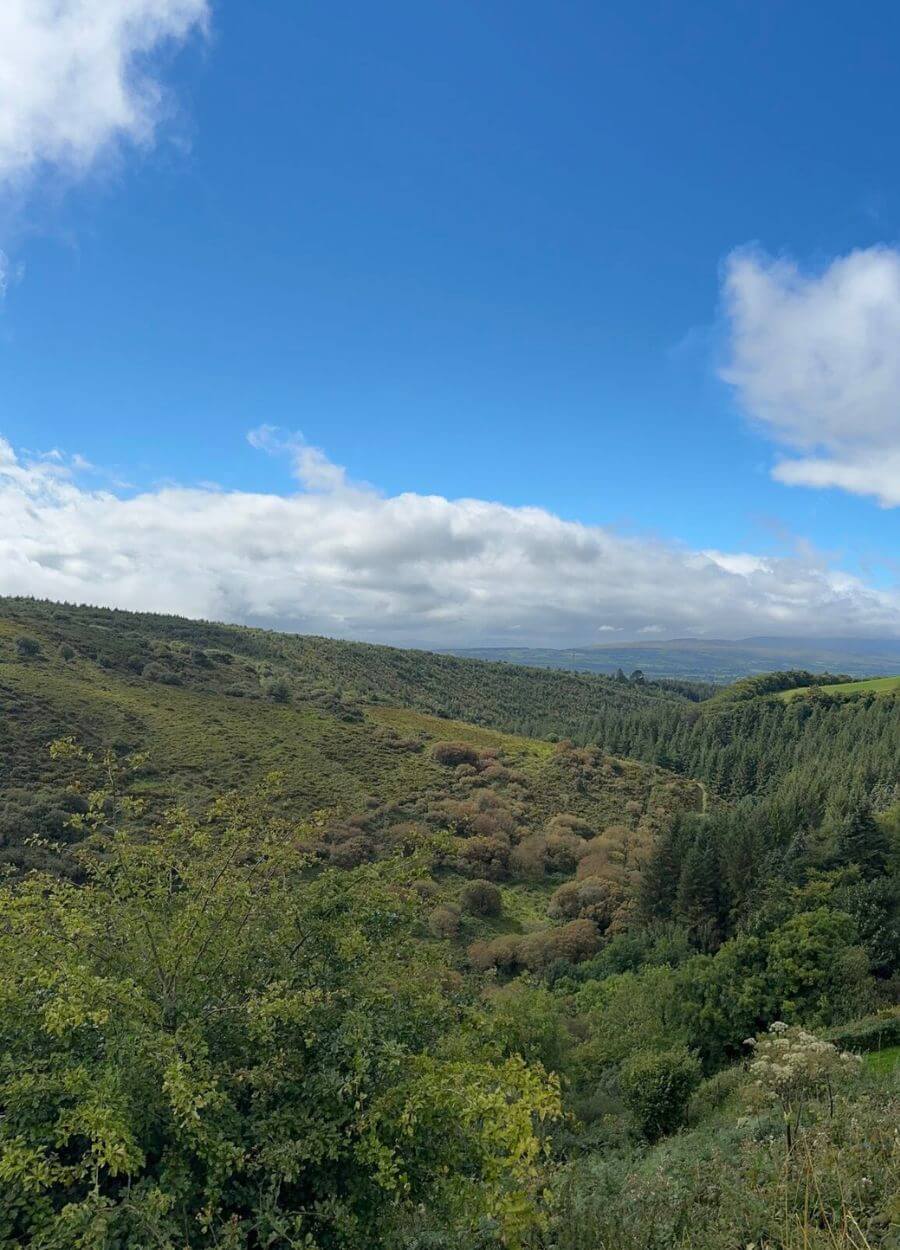
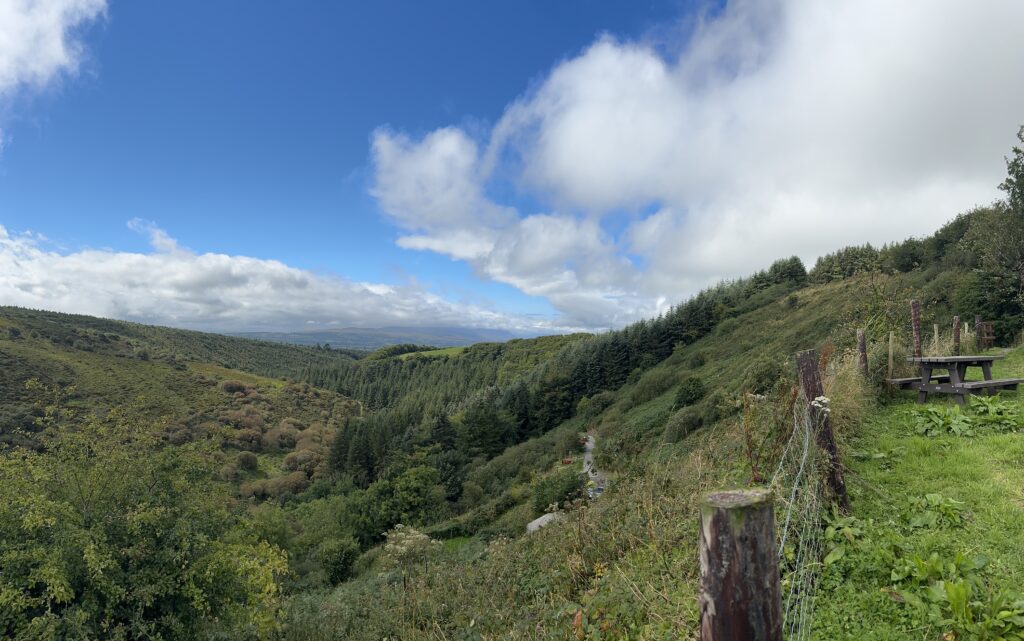
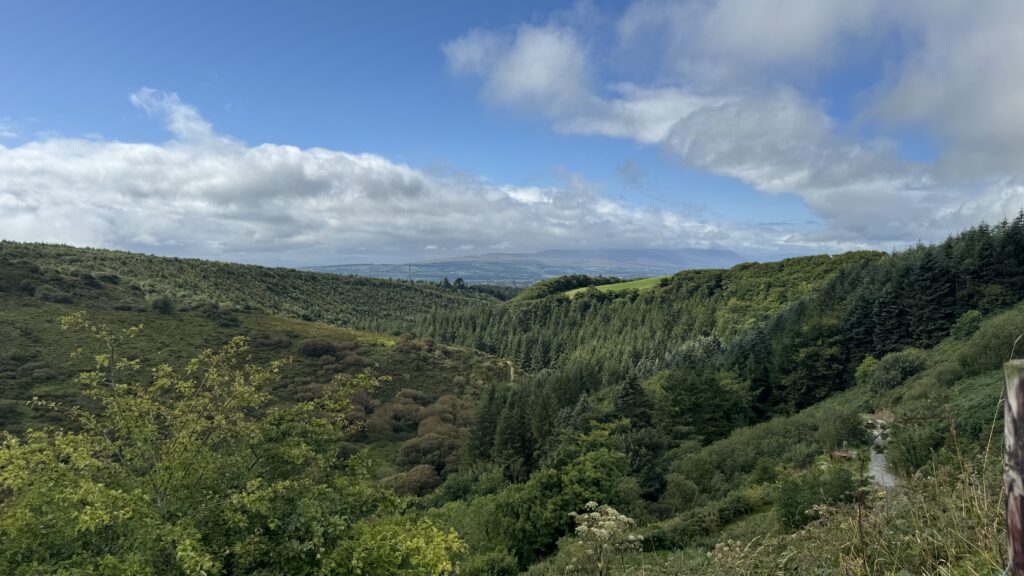
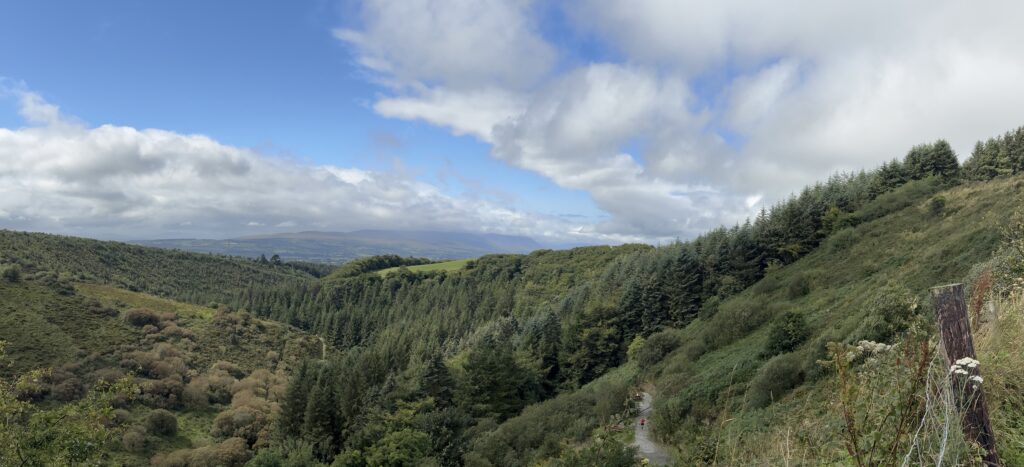
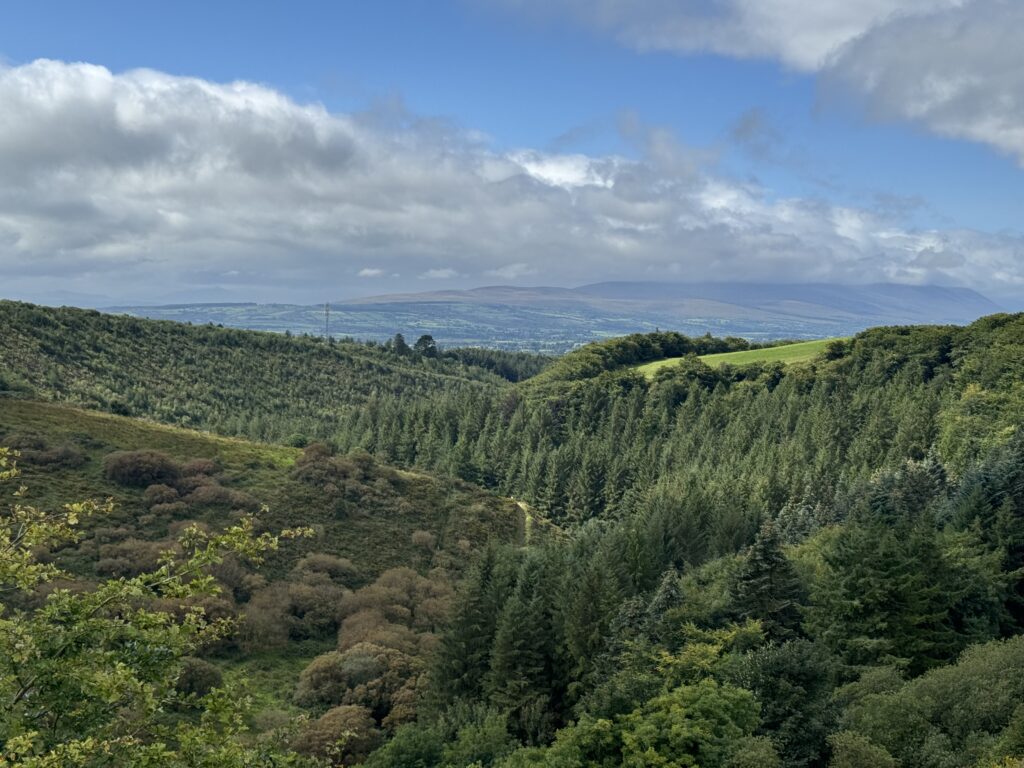
The Glanageenty Valley stretches 3 miles long in an East to West direction. Glanageenty was famous for its oak woods and its wood was exported to play its part in the structure of many famous buildings in England.
Along its river banks many families of humble mountain people raised their families and from a young age the children were taught in the skill of hunting down food by snare, catapult and netting.
These dense woods were described as the Sherwood forest of Munster and indeed it certainly lived up to that reputation with many famous warriors making this mountain area their sanctuary.
Probably the most famous of these warriors was the last Knighted Earl of Desmond who in 1583 was betrayed for a handful of silver by one of his own men. He was captured and beheaded and his body cast aside under an old oak tree here in Glanageenty. A monument now marks the spot where his life ended.
Robert Monteith of the Roger Casement landing at Banna Strand and Stephen Fuller of the Ballyseedy massacre were more fortunate as with the help of the people of the Glen they were securely hidden here in this rugged landscape until it was safe for them to return to their respective homes.
Today these great woods are but a shadow of their former glory but we hope that enough remains to give you the walker a glance back in time.
As you stand here today try and cast your imagination back to the 19th century and picture the children playing here along the river banks in what was then a lush green valley with cattle and goats grazing. On the far side of the river the remains of old vegetable gardens can still be seen high up on the hillside.
Folklore has it that near the summit of this hill was an old burial site and many feel that this was the basis of the name Gleann na gCaointe (the glen of the mourning).
A stage coach road ran along the summit of the hill south of the valley and there is also an old holy well which provided drinking water for the families there. There was also a number of other ordinary wells along the valley where locals gathered to not only collect the water but also to collect all the latest gossip.
On the valley floor lies the ruins of the home of the Bourke family who farmed here in the 19th and 20th century.
The 1901 census shows 10 people living there in the house; parents Michael and Ellen and children Catherine 21, Thomas 18, John 15, Julia 13, Redmond 11, Ellen 9, James 7 and Mary (Minnie) 1.
The 1911 census shows that of 10 children born only 6 were living and 4 of these were here with their parents. Redmond who later went to America, Minnie who married a Lenihan man and was the longest living member of her family when she died in 1986, Thomas and James continued to farm here in Tooreen (the open grass land) until their deaths within a week of each other in the mid 1900’s.
The family left this home in the early 1930’s due to frequent flooding from the nearby river and built a house a mile down river at a more elevated site.
Also along the valley floor we can see many different types of trees and shrubs, these trees and shrubs played a vital part in the survival of these mountain dwellers.
The black sally was grown in great abundance around most houses thus generating the tune “down by the sally gardens”. The bark of the sally was boiled and used as a poltus to heal pains and strains while the liquid inside the bark was known as Salkin and this was used to ease headaches.
The haws and its flowers were mixed 50:50 with spring water and vodka and after a period of approx 2 weeks was strained and the liquid was used to cleanse blood disorders and regulate blood pressure.
The bark of the white willow was boiled and drank to cure bleeding ulcers and its bark was also crushed down to powder and used as a deodorant.
The white sally was also grown in great abundance and was used for thatching the houses and the making of baskets.
The local people here also used trees and shrubs to predict the weather of the upcoming season; things like which trees would bud first in spring etc.
One of the famous sayings around here was “Oak before the ash means a splash” – thus a wet summer. While on the other hand “Ash before the oak means a soak” – thus a dry summer.


On the bogs north of the valley Sphagnum moss was found and this was used to stem blood flow and heal cuts, this same moss was exported during the war years to the soldiers where again it was used to help with injuries.
The glen west of here is known locally as Glounspillane. On the far side is the source of an ancient Holy Well, the water flowing from here through the rock onto the roadway below was believed to hold special powers.
This mountain pass was the main route for Ballymacelligott people travelling to the turf cutting bogs of Lyreacrompane and legend has it that if your horse drank from this well it would not require water again until its homeward journey in the evening. This belief was so strong that many other wells along the way would be bypassed until the traveller reached the Holy Well at Glounspillane.
On the hill due south of here is an area known as Cnoc an Aifreann (Mass Rock). This is an elevated point where in ancient times the Priest stood and held mass for his congregation standing at a lower level.
The rockface on the roadway bend 200 meters south of the holy well is known as the blackbirds rock while the waterfall east of here is known as the Ravens Glen Waterfall.
Where the Bernard Collins car park is now situated is known as Bohar an Iarla or The Earls Road. At the very bottom end of the valley are the remains of an old underground church and also there was an old village consisting of around 40 dwellings, these fell into disrepair during the famine era and the stones from these buildings were used for building the current roadway with locals making 10 shillings for a cart load of stone delivered to the site.
Glanageenty Walkways known also as valley of legends river of tranquillity took its first steps in the end of 2008 and during 2009. Much progress was made in doing the groundwork for what is now one of Kerry’s finest walks and nationally recognsed. It has featured on RTE Tracks and Trails programme and was Walk of the Week in the Irish Independent plus the road leading to the walkway was voted RTE Hectors road of the day a few years ago.
Today this mystical valley is a place of laughter and gaiety as families roam freely along the dense woodland paths listening to the gurgling stream and watching the red squirrels scurrying about their business. Overhead the birds sing loudly from the high branches as shafts of sunlight breaks through to the woodland floor. Around 100 goats roam the landscape here getting plenty fodder from the steep canyon like hillside that rises steeply from the Glanageenty River.
There are many stories of strife and bloodshed stories and about unmarked graves and secret burials along this valley. Stories which are well supported by some of the older generation living today and most certainly well believed by our previous generation.
Maybe more difficult to believe are the mythical stories of a headless Earl of Desmond being sighted here for many years after his death, stories of the old haunted dwelling at the top end of the valley where way too many people disappeared without a trace, a dwelling where eventually even the owner refused to stay and each evening as dark approached he mounted his horse and rode through the woods to stay with his sister on the outskirts of this landscape.
As a child growing up my idol was a mix of Robin Hood and Tarzan and I spent many a happy hour making bow and arrows out of the abundant hazel trees here. However I could scarcely hit a stationary target let alone a moving one but I spent endless hours traversing these woods, ravines and valley and how I never got lost or seriously injured is beyond me.
But the one thing that was well and truly drummed into me by my Grandmother was never to get caught near that house with darkness approaching.
One time in my early teens myself and another young lad from a nearby townland decided to go there one winters evening after it got dark and spend an hour there. We lasted 5 minutes and we never went back! Was it my self conscious mind playing tricks on me or was it a child’s imagination responding to all the eerie stories I had heard about the place? Whatever it was I will admit it was the only place where I heard and saw things I couldn’t explain.
Many years later the house was destroyed and the place no longer held the sinister presence that it once did, it was like some sort of plague or evil had been removed and nowadays hikers stroll past it on the long loop in the dark of night without any knowledge of its dark past. People spoke in hushed voices about a ball of fire being seen rolling along the valley floor at midnight, was it the Earls head many wondered. Some associated it with rumours of 2 unmarked graves close to the Bridge of Tears beside the current walkway, a local huntsman who lived nearby and who is now dead about 50 years claimed to have found such graves while out hunting but never spoke of it outside of his family until towards the end of his life. I was somewhat enthralled by this story and did a good deal of research into it around the time the walkway was set up.
My research if anything confirmed the story and I was told the 2 men were brought here in a horse and cart and made dig their own graves. I was even given the names of the two men however at that stage I was told politely but firmly not to continue my research any further as I may not like what I found out so for now the truth lies hidden and shrouded in mystery like the two bodies somewhere on the valley floor of Glanageenty.
My research if anything confirmed the story and I was told the 2 men were brought here in a horse and cart and made dig their own graves. I was even given the names of the two men however at that stage I was told politely but firmly not to continue my research any further as I may not like what I found out so for now the truth lies hidden and shrouded in mystery like the two bodies somewhere on the valley floor of Glanageenty.
There were numerous stories told of children heard crying in the woods but these things were rarely or never spoken of outside of the valley for fear of been ridiculed by those who didn’t understand the way of these mountain people. But for those of us who grew up here and had on numerous dark nights to traverse our way across this eerie valley we knew the stories all too well and they took on an entire new dimension as you tiptoed along, heart beating wildly in your chest, at every creak or crack of a branch or every splash in the nearby river as you made your way ever closer to that welcoming candle light in the window of the place called home.
Further down the valley is the remains of an old underground church and only a couple of years ago people from New Zealand arrived in Ballymacelligott looking for the site of the church where their Grandparents had been baptised and it was indeed at this old underground location.
At the bottom end of the valley are the remains of the old Silvermines and along the way can be seen faint remains of the many dwellings along the river bank. Prior to the great famine a large village of around 40 dwellings existed at Clogher on the outskirts of Glanageenty woods and the stones from these houses were later used to build what is now the current Glanageenty roadway.
In a recent interview with Michael Brosnan of Clogher he explained so much about the village and the old church plus he showed us the horse and cart track through the woods where people used as access to the church yard at Killbawn.
He described how there was a double ringed fort here and between the outer and inner ring of the fort was used as a burial ground. He described how, during the persecution of the churches, worshippers used to hike and horse ride along the valley floor by the river up to the mass rock on Francie Lenihans mountain where the current walkway is now built.
The Glanageenty River starts out as a harmless enough stream at the top end of the valley but as it flows down through the woods it’s continuously building in force as many mountain ravines join it on its journey and by the time it escapes the clutches of Glanageenty woods it’s a major river which has claimed more than one life over the years – including that of a priest out visiting his congregation on horseback.
As a young boy growing up here I experienced a much different lifestyle than most young boys of my era. My formal education was short lived with me spending only 5 or 6 years in school but I had all the education I needed to live and hunt with the adults often covering several miles from the woods of Glanageenty to the slopes of the Stacks mountains. My dad taught me how to track game across the snow covered hills in the winter, he taught me how to trap, snare and hunt for food of hares, rabbits etc. The fox was a sworn enemy to us as they were a continuous threat to our hens, ducks and lambs so this often resulted in a tracking session to find the foxes lair. My dad was an outstanding shot with a slingshot but much as I tried it was a skill I never conquered.
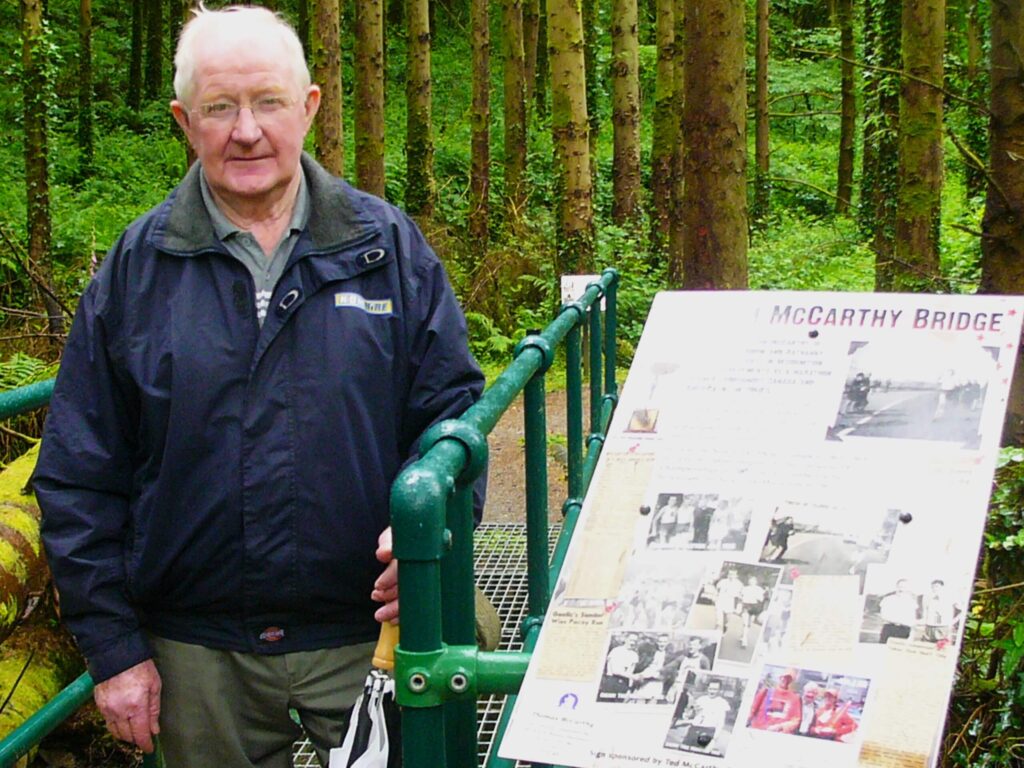
At the age of 17 I had a life changing and possibly a life saving experience when my athletic talent was discovered by the Walsh twins Joe and Gerald in Castleisland. A few years later I was selected on the Irish cross country team with world cross country champion John Treacy. Years later when well known journalist Con Dennehy wrote a book on my life he choose John Treacy to write the foreword and John in his introduction described our first meeting: he said I was extremely shy but in a way almost not tame, surely the product of an upbringing in an environment so different to those of a similar age group.
For the record I wish to log the names here of people I got to know and even got to drink a bottle of Nashes lemonade in many of their homes, a treat saved only for special visitors.
Brother and sister Jack and Nora Collins, Jack (Thumb) Connor, the Reidys; both Jackie and Patseen, Moss (the German) Reidy and his sister I think her name was Julie who used to scare the living daylights out of me as I thought she was a witch the way she dressed and she was always in the hedgerows picking sticks for the fire.
To the east of us was Danny and Lizzie Sullivan and John and Richard Bernard. Further East lived a woman in a little hut made of sticks and mud in the moors, I’m not sure if I can remember her or just my dad showing me where she lived.
Across the bog was Thadgh Cud Sullivan but I never really knew him. Our closest neighbours were James Lyons and his father John and just beside him lived Tom Blennerhassett and his wife Joyce with the Herlihy family of Tom and Paddy just up the road from them.

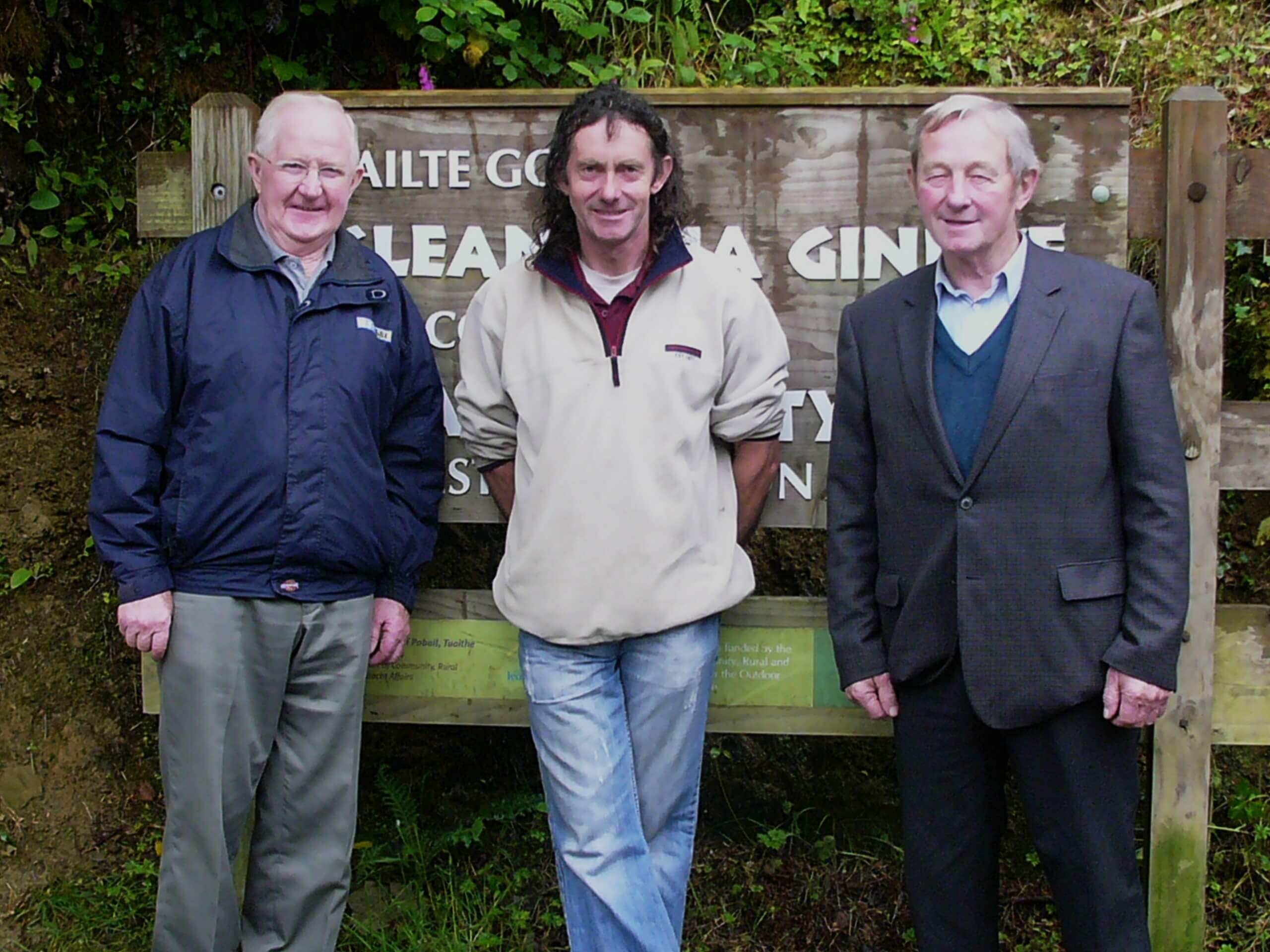
Today Glanageenty is such a different place with so much to offer to tourists and historians alike.
The legacy of our ancestors lives on here and when you ponder for a while among the woods you can sense you are standing among a rich and colourful history.
The many signs along the route give you a glimpse into that colourful history but a little bit of imagination can probably give you an even greater insight. For years it was discouraged for outsiders to come here but now thanks to the Glanageenty Walkways people from near and far can enjoy the freedom, the peace and the tranquillity of this rugged landscape.
This is how I have seen it through my eyes growing up here, others might see it differently.
It seems like only yesterday that I hung ropes across the ravines and off the tops of tall trees and climbed them effortlessly straight up and down the vine like ropes, however I have to remind myself that I now have passed my 60th year and I have to reluctantly change my pace of life!
My greatest wish for now is to sit and watch this walkway grow and to see people of all ages appreciate this hidden gem in what was for years a virtually unknown Valley which harboured Villains and Heroes alike beneath its thick canopy.








Click on the images below for more information on Glanageenty Walks and the History surrounding this area of Ireland.